
Published On: September 29, 2026
If you own waterfront property on Lake Martin, protecting the shoreline is part of protecting everything you’ve built around it.
But when it’s time to address erosion or replace an aging seawall, choosing between the different types of seawalls isn’t always straightforward.
Concrete may be the right solution for one property. Another shoreline may be better suited for boulders, interlocking blocks, or a more natural rock solution. Even two neighboring properties can require different approaches based on water exposure, elevation, drainage, soil conditions, and how the waterfront is used.
The question isn’t simply, “What’s the best seawall?”
It’s “what will protect this particular property for years to come?”
What Are the Different Types of Seawalls?
On Lake Martin, shoreline protection can take on several forms. LakeScape works with solutions including:
- Concrete seawalls
- Wood seawalls
- Boulder walls
- Interlocking block systems
- Rock walls
- Rip Rap shoreline protection
While homeowners may refer to all of these as seawalls, they don’t all function in exactly the same way.
A traditional seawall creates a defined barrier between the water and land. Rip rap, by comparison, isconsidered shoreline stabilization because the stones help absorb and disperse wave energy along the shoreline rather than creating the same vertical barrier.
Understanding that distinction matters because choosing shoreline protection should begin with the conditions of the property, not simply the material you prefer.
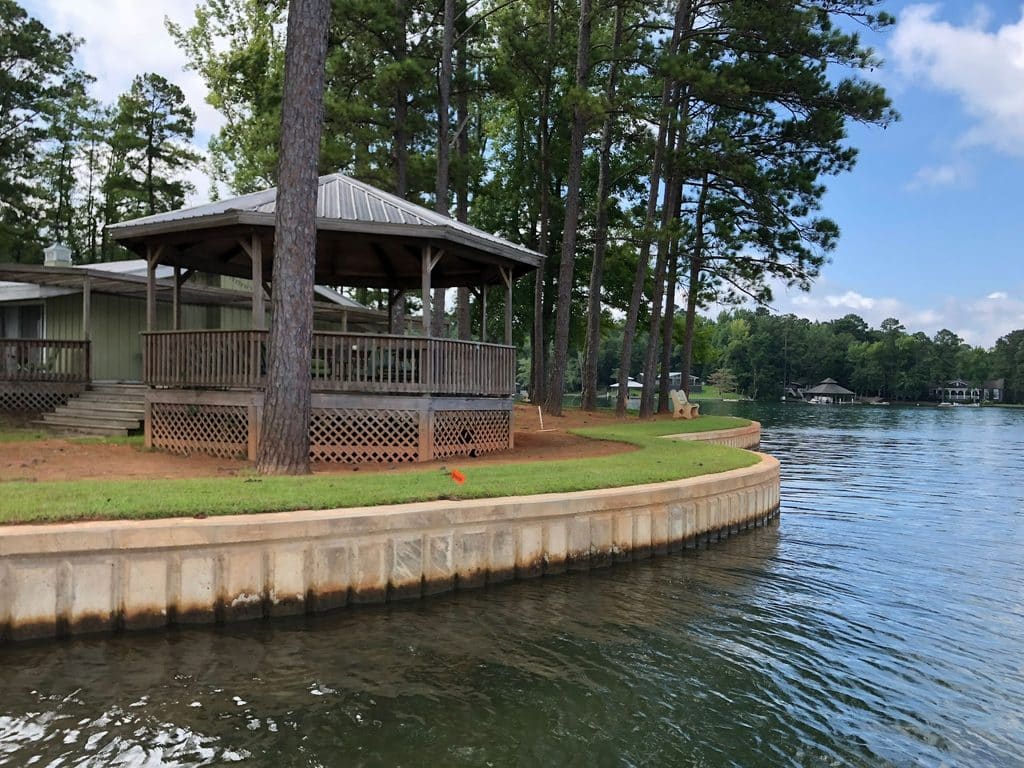
Concrete Seawalls: Built for Long-Term Protection
For properties that require a structural seawall, concrete is often the solution LakeScape encourages.
Concrete provides a substantial barrier at the water’s edge and can be designed around the conditions of the shoreline. On Lake Martin, that means accounting for factors such as changing water levels, soil conditions, water pressure, and repeated exposure to waves and boat wakes.
A seawall isn’t something you want to reconsider every few years. If you’re investing in your lake property for the long term, the goal is to choose a system that appropriately protects the land and the improvements above it.
Concrete can also create a clean, defined waterfront edge that works well with docks, stairs, landscaping, and more refined outdoor living spaces.
That doesn’t mean every shoreline needs concrete. It means that when the property requires significant structural protection, durability and engineering should take priority over choosing a material based solely on appearance.
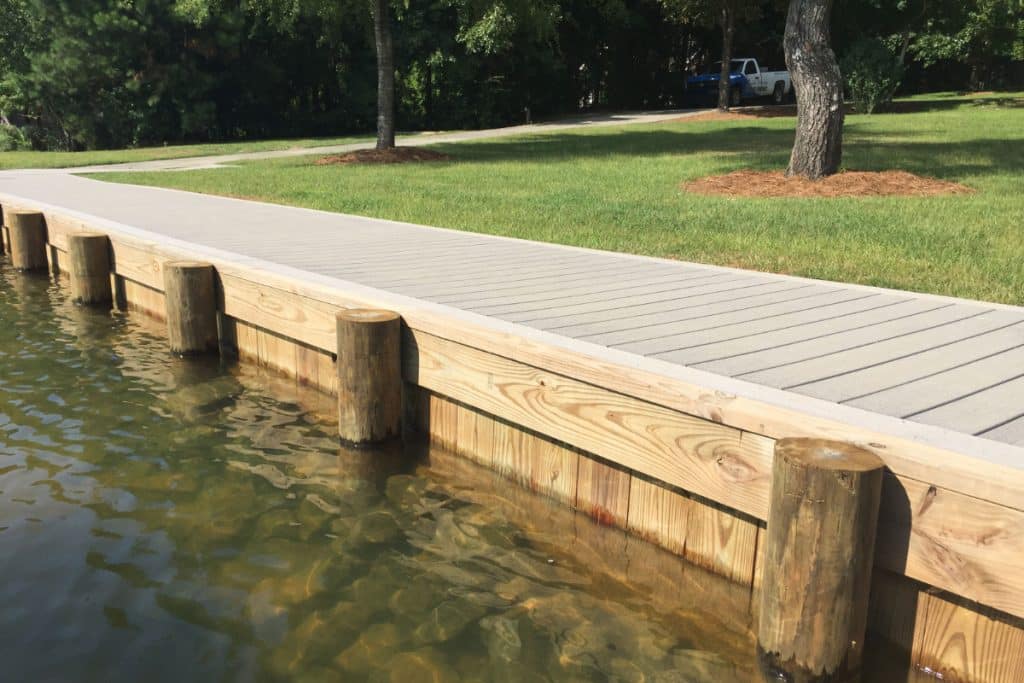
Wood Seawalls: A Traditional Waterfront Solution
Wood seawalls have long been used along waterfront properties and can still be appropriate in certain applications.
They create the familiar vertical barrier most homeowners picture when they hear the word “seawall,” and their natural appearance can complement wooded lakefront properties.
The tradeoff is the environment they’re being asked to perform in.
Wood installed at the shoreline is continually exposed to moisture and changing conditions. Over time, deterioration can become a greater consideration than it is with some alternative materials.
That’s why LakeScape generally encourages concrete when the conditions and project call for a structural seawall.
If you already have a wood seawall, age alone doesn’t determine whether it needs to be replaced. Movement, deterioration, soil loss, drainage problems, and the condition of the system as a whole should be evaluated before deciding what comes next.

Boulder Seawalls: Protection With a Natural Presence
For homeowners who don’t want the shoreline to feel overly constructed, boulders offer an entirely different aesthetic.
Large natural stones can create a substantial transition between the landscape and water while visually connecting the shoreline to the rest of the property.
This can be particularly attractive on Lake Martin properties where landscaping already incorporates natural stone, native plantings, or more organic outdoor spaces.
Boulders also give the shoreline dimension. Instead of creating a perfectly straight edge, they can become part of the landscape design itself.
But appearance should still follow performance.
The slope of the property, water exposure, erosion patterns, drainage, and what sits above the shoreline all influence whether a boulder solution makes sense. A natural look doesn’t eliminate the need for thoughtful planning underneath it.
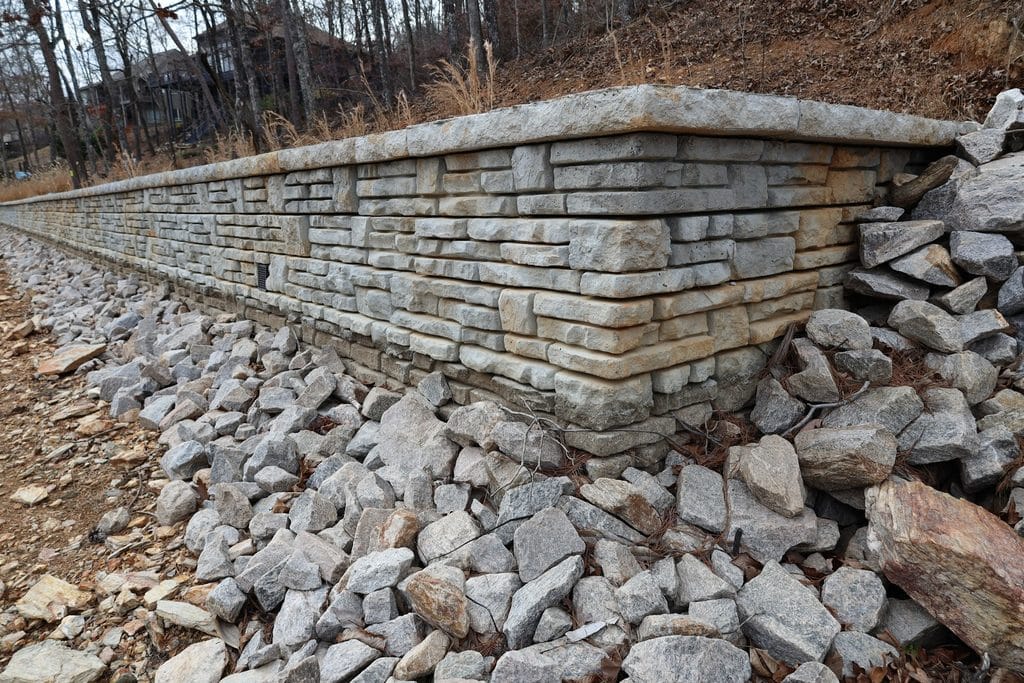
Block Seawalls: Structure With Design Flexibility
Interlocking block systems offer another option for creating a strong, finished shoreline edge.
LakeScape works with block systems such as Novum and Belgard. Individual units fit together to create a structured wall, allowing the finished system to feel intentional while offering more visual flexibility than traditional poured concrete.
For a homeowner thinking about the entire property, that flexibility can be valuable.
A block wall can coordinate with nearby hardscape, patios, stairs, walkways, and landscaping so shoreline protection feels integrated into the design rather than added as an afterthought.
Depending on the system and application, block can also work where retaining and shoreline needs begin to overlap.
The important distinction is that “block” isn’t simply a decorative choice. Wall height, soil pressure, drainage, foundation conditions, water exposure, and the intended use of the area above it all need to be considered when determining whether an interlocking system is appropriate.
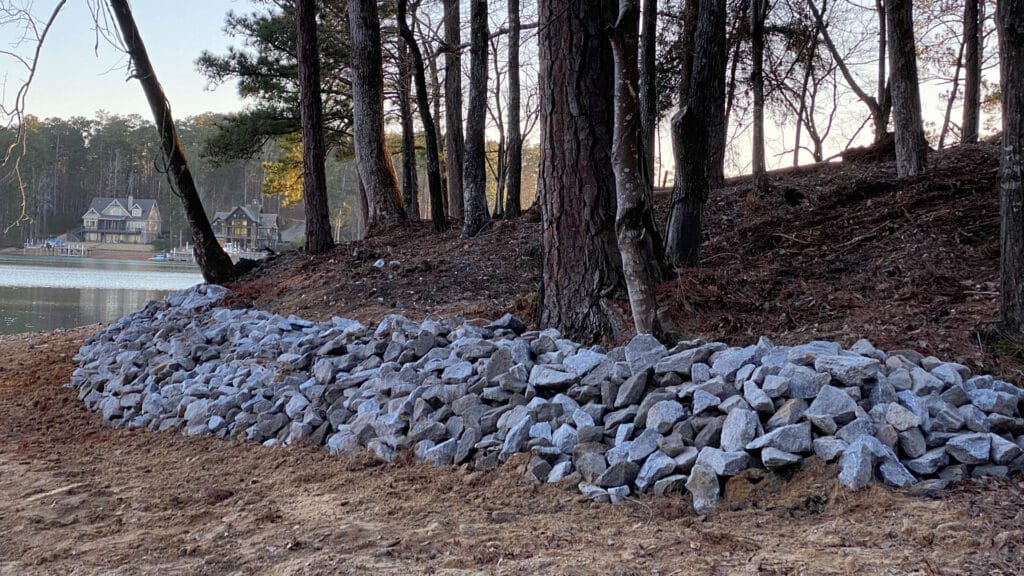
Rock: Working With the Shoreline
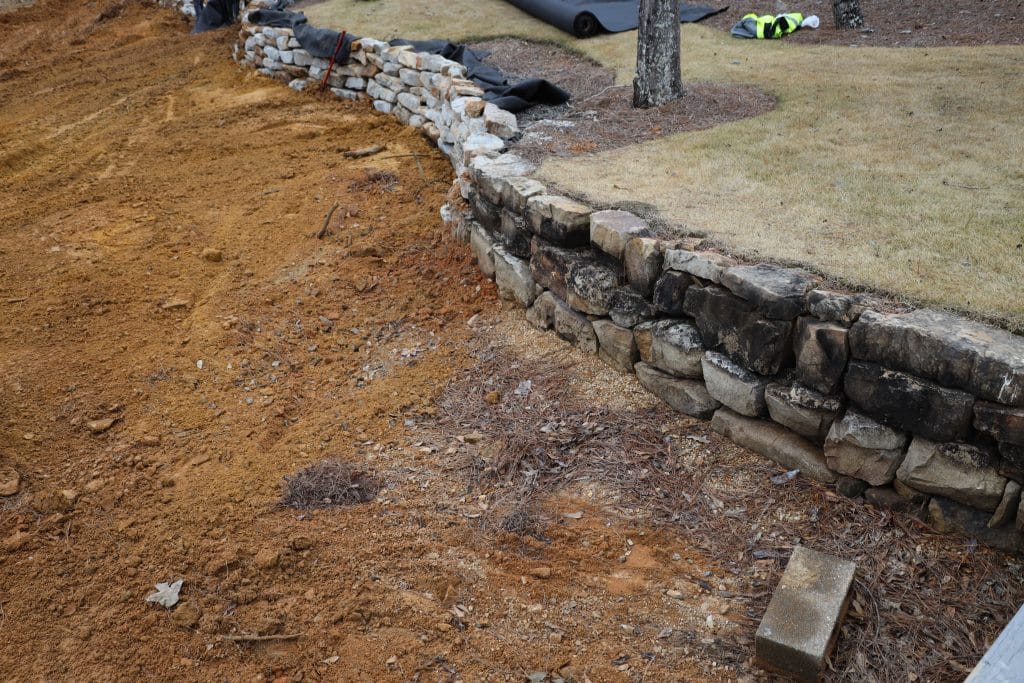
Rock seawalls offer a more natural way to create a defined transition between the property and the water.
Using smaller natural stone than a boulder seawall, rock can help protect the shoreline while maintaining an appearance that feels at home within the Lake Martin landscape. For homeowners who want shoreline protection to blend into the surrounding property rather than create a hard architectural edge, rock can be an attractive option.
It can also integrate naturally with nearby landscaping, slopes, planting areas, and other outdoor spaces, allowing the shoreline to feel like part of the overall property design.
As with any shoreline solution, however, appearance is only part of the decision.
Water exposure, erosion, slope, drainage, soil conditions, and how the waterfront is used all need to be evaluated before determining whether a rock seawall is appropriate.
For the right property, the result is shoreline protection that feels intentional without looking overly constructed.
Rip Rap: Protecting the Shoreline From Erosion
Rip rap serves a different purpose than a traditional seawall.
Rather than creating a solid vertical barrier, rip rap uses loose, angular stone placed along a sloped shoreline. The spaces between the stones allow water to drain while the rock absorbs and disperses wave energy, helping reduce erosion along the bank.
That makes rip rap particularly useful on naturally sloped shorelines where erosion control is the primary concern and maintaining a hard vertical edge isn’t necessary.
There are tradeoffs. Because rip rap follows the slope of the bank, it requires more horizontal space than a vertical seawall. Proper stone sizing and installation are also important, including the material underneath the stone, to help prevent settling and deterioration over time.
But rip rap isn’t always an alternative to a seawall. Sometimes, it’s part of the seawall system itself.
On Lake Martin, Alabama Power’s shoreline permitting guidelines require rip rap at the toe of new and reconstructed seawalls, except in limited approved circumstances. That stone helps address one of the inherent challenges of a vertical seawall: instead of absorbing wave energy, the wall reflects it. Over time, that energy can scour sediment from around the base of the wall and compromise its footing. The rip rap apron helps break up that energy and protect the base.
So when evaluating shoreline protection, the question isn’t necessarily “seawall or rip rap?”
Depending on the property, the two may work together.
And that’s another reason the conversation should begin with the shoreline itself: What is the water doing here, what needs to be protected, and what solution will manage those conditions for the long term?
Which Type of Seawall Is Best?
There isn’t one type of seawall that’s best for every Lake Martin property. The right solution depends on what the shoreline needs to accomplish.
If you’re comparing options, consider:
Water exposure: Is the property tucked into a protected cove or exposed to repeated wakes and greater wave action?
Existing erosion: Are you seeing minor soil loss, or is the shoreline already moving or washing away?
Elevation: Is the yard relatively level at the water, or does the shoreline support a significant grade change?
Drainage: Where does stormwater travel across the property, and is water pressure contributing to the problem?
Structures above the shoreline: Is the area supporting landscaping alone, or are patios, walkways, stairs, docks, or other improvements nearby?
Appearance: Do you want a clean architectural edge or a shoreline that blends more naturally into the landscape?
Long-term plans: Are you protecting the property as it exists today, or are a new dock, boathouse, patio, landscaping project, or other waterfront improvements part of the future plan?
The last question is particularly important. Shoreline work shouldn’t be planned in isolation if you already know the waterfront is going to change.
Look Beyond the Seawall
Sometimes the most important discovery during a seawall conversation is that the seawall isn’t the only issue.
Water moving across the property can contribute to erosion from behind. An aging dock may interact with the shoreline. A future patio or walkway may change how the area needs to be supported. Landscaping can influence drainage and soil stability.
That’s why LakeScape evaluates the waterfront as a connected environment.
If you’re still determining whether your property needs a seawall, retaining wall, or another form of shoreline stabilization, read our guide to Retaining Walls, Seawalls, and Shoreline Solutions for a deeper look at how those systems differ.
Don’t Wait Until the Shoreline Makes the Decision for You
Shoreline problems rarely begin with a dramatic failure.
You may first notice soil disappearing from behind the wall. A section may begin to lean. Rocks may shift. Drainage patterns change. A low area becomes more noticeable after heavy rain.
Those smaller changes are worth paying attention to.
An evaluation gives you the opportunity to understand what’s happening before deciding what to build. And if you’re considering additional waterfront improvements in the next few years, it creates an opportunity to plan them together rather than solving one problem only to revisit the same area later.
The best seawall isn’t simply the strongest material or the one that looks best from the water.
It’s the solution designed around your shoreline, your property, and how you intend to enjoy it for years to come.
