
Choosing the Right Structure for Your Lakefront Property
Lakefront erosion rarely announces itself dramatically. It starts subtly. A slight slope change, soil that feels softer underfoot. Water reaching farther up the bank after a heavy rain. Over time, those small shifts compound.
Many homeowners respond by searching for a retaining wall, assuming it solves every shoreline issue. Others hear the term seawall and assume that’s the stronger, more permanent solution. Some hope simple shoreline stabilization will handle the problem without structural intervention.
Each of these approaches serves a different purpose.
Choosing the right structure requires more than stopping visible erosion. It requires understanding how your shoreline behaves, how your property sits relative to the water, and how you plan to use the space in the years ahead.
This guide explains how retaining walls, seawalls, and shoreline stabilization systems differ in function, performance, and long-term protection for lakefront properties.
Erosion Builds Gradually, Then Accelerates
Erosion rarely begins as a structural emergency. It starts with natural forces working consistently against the shoreline.
Water movement from wind and boat wakes loosens soil. Heavy rain increases runoff. Seasonal water fluctuations shift pressure at the waterline. Over time, these forces reshape the edge of the property.
Homeowners often notice:
- Small sections of soil washing away
- Exposed roots or shifting steps
- Dock transitions feeling uneven
- Shoreline edges softening or collapsing
When left unaddressed, these changes accelerate. Soil loss increases slope instability. Water reaches farther inland. Structural supports near the shoreline lose reliable footing.
Many homeowners assume that any visible erosion requires a retaining wall. In reality, the correct solution depends on how the land carries load, how water interacts with the bank, and how the property integrates with docks and outdoor living areas.
Erosion control does not follow a one-size-fits-all formula.
Understanding the Purpose of Each Structure
Before selecting a solution, homeowners must understand what each system actually does.
What Retaining Walls Do
Retaining walls manage grade changes. They hold back soil and create stable, vertical transitions between elevations.
On lakefront properties, retaining walls often:
- Support sloped yards
- Prevent soil from collapsing toward the water
- Create usable flat areas above the shoreline
- Stabilize areas supporting patios or steps
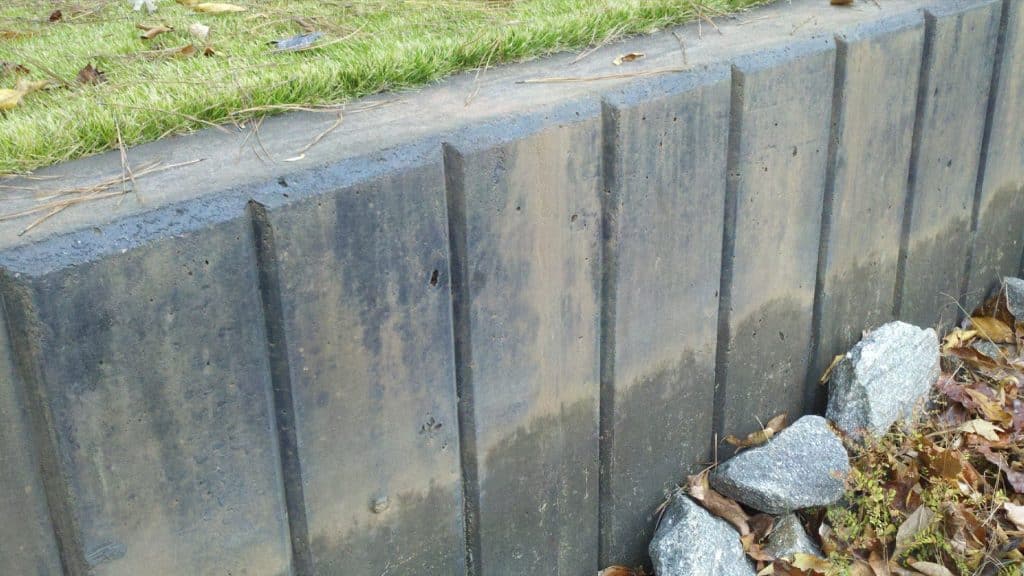
Retaining walls focus on land pressure. They manage the weight of soil and prevent slope movement.
They do not necessarily absorb heavy wave impact unless specifically engineered to do so.
What Seawalls Do
Seawalls protect the shoreline from direct water force.
Unlike retaining walls, seawalls primarily resist wave energy, boat wake impact, and fluctuating water pressure. They form a barrier between water and land, reducing erosion at the immediate shoreline edge.
Seawalls often:
- Provide a hard edge along the waterline
- Resist repeated wave contact
- Protect property where water energy remains high
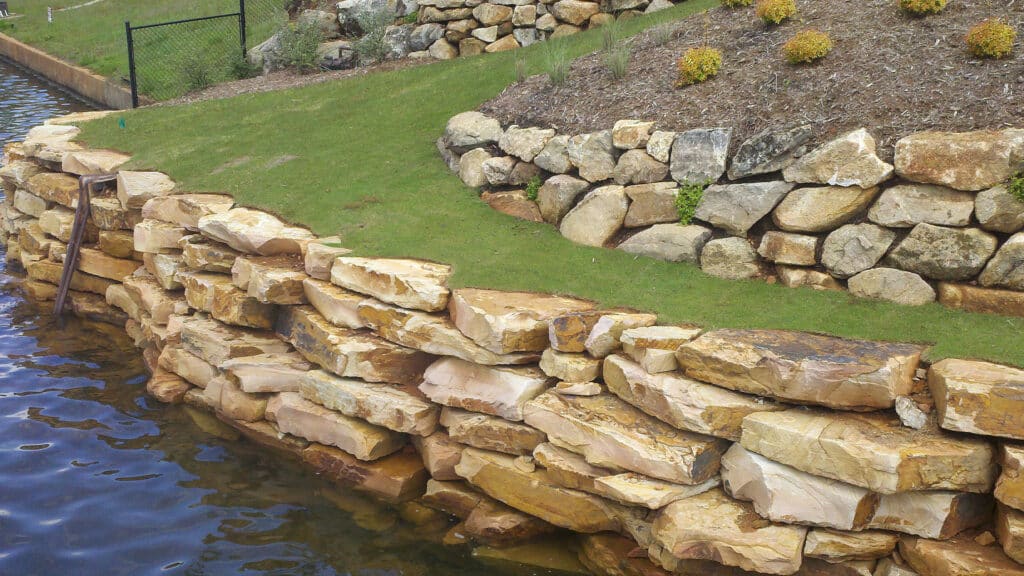
Where retaining walls manage soil load, seawalls manage water force.
What Shoreline Stabilization Does
Shoreline stabilization uses more natural methods to reduce erosion.
These methods may include:
- Riprap stone placement
- Vegetation reinforcement
- Slope grading adjustments
- Drainage control
Shoreline stabilization works best where erosion remains moderate and where wave energy does not demand structural reinforcement.
It blends into the environment and slows soil displacement without introducing vertical structural elements.
The correct choice depends on three primary factors:
- Land slope and elevation change
- Water exposure and wave energy
- Future property use and structural load
Homeowners who understand these distinctions make more confident decisions.
Matching the Structure to the Property
Selecting the right shoreline solution requires evaluating performance over time, not just immediate appearance.
Load and Structural Pressure
If the property includes steep elevation changes or supports patios, stairs, or outdoor living areas, soil pressure becomes a primary concern.
In these situations, retaining walls often outperform shoreline-only solutions because they manage grade stability above the waterline.
If the primary concern involves consistent wave force at the shoreline edge, seawalls typically provide stronger direct resistance.
Water Energy and Wake Exposure
Not all shoreline sections experience equal water energy.
Properties exposed to heavy boat traffic or consistent wind-driven waves face greater lateral force. In these environments, structural seawalls may provide necessary reinforcement.
Properties located in calmer coves may respond well to shoreline stabilization methods that reduce erosion without rigid vertical structures.
Understanding how water behaves on your specific shoreline determines which structure performs best.
Drainage and Hydrostatic Pressure
Water does not only push from the lake side. It also builds pressure from behind.
Improper drainage allows water to accumulate behind retaining walls or seawalls. Hydrostatic pressure increases structural stress and shortens lifespan.
Builders must design drainage systems alongside structural elements. Weep holes, backfill materials, and slope management all contribute to durability.
Without proper drainage, even the strongest wall will struggle.
Material Selection and Longevity
Materials determine how a structure performs over decades.
Concrete, stone, steel, and composite systems all offer different strengths. Builders must consider:
- Freeze-thaw cycles
- Water exposure
- Soil composition
- Structural height
Lower-grade materials may look strong initially but require more frequent reinforcement.
High-quality materials paired with proper engineering create structures that maintain stability and visual appeal over time.
Integration with Docks and Outdoor Systems
Shoreline structures rarely stand alone. Docks connect to the bank. Steps transition from yard to water. Patios extend toward the shoreline. Boat lifts operate nearby.
If the shoreline structure does not align with dock placement and future upgrades, homeowners encounter friction later.
For example:
- A poorly aligned retaining wall may restrict dock expansion.
- An improperly placed seawall may complicate lift installation.
- Inadequate slope management may undermine patio stability.
A comprehensive evaluation considers how shoreline structures interact with the entire waterfront system.

Planning for How the Property Will Be Used
The smartest shoreline decisions account for future use, not just current erosion.
Homeowners should reassess their shoreline strategy if they notice:
- Repeated soil displacement
- Ongoing patchwork fixes
- Steps or walkways shifting
- Dock supports losing stable footing
- Outdoor spaces inching closer to water exposure
At a certain point, temporary reinforcement stops solving the root issue.
Installing a properly engineered retaining wall or seawall early often prevents more extensive land movement later. Conversely, selecting heavy structural solutions where stabilization would suffice can introduce unnecessary cost and complexity.
The decision depends on:
- How aggressively the shoreline erodes
- Whether the yard supports additional structures
- Planned dock, lift, or patio upgrades
- Long-term ownership goals
When homeowners evaluate shoreline structure within the context of overall property use, they avoid reactive decisions.
Common Questions About Retaining Walls and Seawalls
Do I need a retaining wall or a seawall?
You need a retaining wall when soil pressure and grade changes require structural support. You need a seawall when wave energy and water force drive shoreline erosion. Some properties require both.
Can shoreline stabilization replace a retaining wall?
In moderate erosion conditions, yes. Stabilization methods work well when slope remains manageable and water force remains limited.
How long do retaining walls last on lakefront property?
Longevity depends on material quality, drainage, and installation. Properly engineered systems can perform for decades.
Will a seawall stop all erosion?
A seawall reduces direct shoreline erosion from wave impact, but it must integrate with proper drainage and slope management to remain effective.
Should I address minor erosion now?
Yes. Early structural evaluation provides more options and reduces the likelihood of larger land movement later.
Protecting Shoreline Integrity for the Long Term
Retaining walls, seawalls, and shoreline stabilization systems each play a role in protecting lakefront property. The right solution depends on how land and water interact on your specific shoreline.
When homeowners choose structures based on performance rather than assumption, they create stable transitions between yard and water. They protect docks and outdoor living areas from shifting foundations. They preserve usable space for years to come.
Shoreline protection works best when builders evaluate the entire system, not just the erosion line.
Learn What Your Shoreline Needs
If you notice shifting soil, uneven steps, or gradual land loss, it may be time to evaluate your shoreline structure.
A LakeScape site evaluation examines slope, water exposure, drainage, and dock integration to determine whether a retaining wall, seawall, or stabilization approach will perform best on your property.
Understanding how your shoreline behaves today allows you to make decisions that protect both your waterfront and your investment moving forward.
