
Search for “patio ideas” and you’ll find endless inspiration. Fire pits arranged in circles. Patterned pavers. Decorative pergolas wrapped in lights. Most of those ideas work well in a backyard.
They rarely work the same way on the water.
A lakefront patio does not sit quietly behind a fence. It lives beside open water, shifting light, changing elevations, and daily movement between shoreline and home. If you design it like a suburban patio, it will eventually feel out of place.
When we design patios at LakeScape, we start with the lake itself. The water becomes the dominant feature. The patio becomes the frame.
This guide walks through modern patio ideas for lakefront homes from that perspective: architectural, intentional, and built to perform as well as they look.
The Lake Changes the Rules of Patio Design
A backyard patio competes with fences, landscaping, and neighboring houses. A lakefront patio competes with the horizon.
That difference changes everything.
Light Reflects Upward, Not Just Down
At the waterline, sunlight reflects off the surface of the lake. That reflection intensifies exposure on flooring, furniture, and structural edges. Surfaces that feel manageable inland can feel harsh and glaring beside open water.
When we design a waterfront patio, we study how light moves across the property throughout the day. We look at reflection angles, glare points, and heat retention before selecting materials.
Wind Moves Differently at the Shoreline
Open water accelerates wind. Gusts travel across the surface without obstruction and reach the shoreline with more force than they would in a typical backyard.
Furniture placement, shade structures, and vertical elements must account for that movement. We position gathering zones to avoid crosswinds rather than react to them later.
Water Levels Fluctuate
Lake levels change seasonally and sometimes dramatically. A patio that aligns perfectly with the dock in June may feel awkward in November if elevation planning was short-sighted.
Modern patio ideas for lakefront homes must anticipate those changes. We align grades, transitions, and structural connections with future movement in mind.
The lake does not adjust to the patio. The patio must respect the lake.
Architectural Before Accessories
Most patio ideas begin with furniture. We approach it differently.
We design the structure first. Accessories follow.
Establishing Clean Architectural Lines
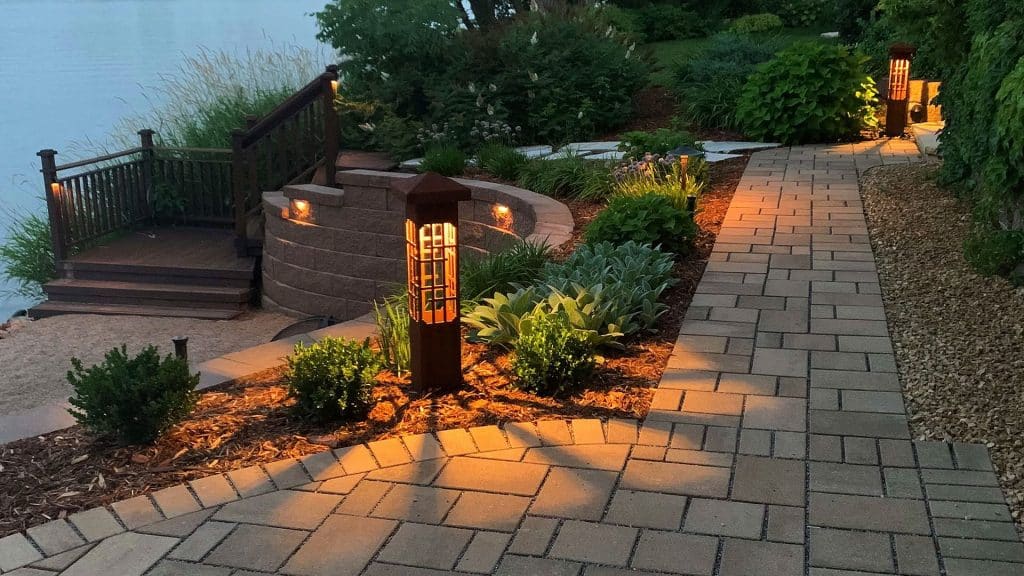
Modern lakefront patios rely on strong horizontal lines. Long slab runs, continuous paver layouts, and restrained edge treatments echo the horizon and create visual calm.
When you stand on the patio and look out over the water, nothing should compete with that line. Overly decorative borders, busy patterns, and ornamental trim interrupt the experience.
We design for simplicity because simplicity amplifies the setting.
Material Continuity from Interior to Exterior
If your home features clean, modern finishes inside, the patio should extend that language outward.
We often align:
- Flooring tones between interior and exterior
- Grid patterns from window mullions to patio slab joints
- Structural alignments from façade to shoreline
That continuity makes the patio feel intentional rather than added.
Designing Grade Transitions with Purpose
Lakefront lots often slope toward the water. Instead of forcing a flat slab against uneven terrain, we design layered transitions.
We may create:
- An upper terrace for dining
- A mid-level lounge zone
- A lower platform aligned with dock access
When elevation changes feel deliberate, the entire space gains dimension without clutter.
Architecture anchors the patio. Décor refines it.
Designing for Effortless Movement
Luxury on the water shows up in how easily you move.
You should not need to think about where to step, how to navigate around seating, or how to reach the dock with a cooler in hand.
Establishing Clear Circulation Paths
We map traffic intentionally:
- Sliding doors to primary seating
- Seating to dock transitions
- Dock back to storage zones
- Kitchen to outdoor cooking area
Primary walkways remain clear of furniture. Seating anchors to the edges, not the middle.
When guests arrive, they instinctively understand how to move through the space.
Aligning Patio and Dock Elevations
One of the most common friction points we see is misalignment between patio height and dock level.
If the patio sits too high or too low relative to the dock, homeowners add temporary steps or ramps. Those fixes compromise both safety and aesthetics.
We evaluate dock elevation early and design the patio to transition naturally. Movement from patio to dock should feel fluid, not engineered after the fact.
Concealing Storage to Preserve Order
Clutter undermines even the best patio ideas.
Life jackets, ropes, fenders, and water toys accumulate quickly at the shoreline. We integrate concealed storage into bench seating or structural walls to maintain clean sightlines.
When everything has a place, the patio remains composed without constant effort.
Effortlessness comes from forethought.
Material Selection for Waterfront Performance
Materials define how a patio ages. At the lake, performance matters as much as appearance. Seasonal temperature swings expand and contract materials more aggressively than many homeowners expect.
When you select materials for a lakefront patio, you are not choosing how it looks next summer. You are choosing how it behaves five summers from now.
Modern patio ideas for waterfront homes must prioritize surfaces and structural systems that reduce ongoing maintenance and eliminate recurring repairs.
Belgard for Durability and Precision
High-quality pavers has become one of the strongest material options for modern lakefront patios, and not because it photographs well.
Belgard products are designed not only for style but durability. That matters at the waterline, where surface saturation can lead to cracking, staining, and freeze-thaw stress in more porous materials.
From a maintenance standpoint, high-quality Belgard pavers and stone systems offer several meaningful advantages for waterfront patios.
- They resist staining when properly installed and maintained. Lakefront patios see sunscreen, spilled drinks, fish residue, damp towels, and constant foot traffic from dock to home. Belgard’s engineered surface density helps limit deep absorption, which makes routine cleaning more manageable and reduces long-term discoloration.
- They maintain color consistency under intense UV exposure. Sunlight at the lake reflects off the water, increasing overall exposure. Lower-grade pavers can fade unevenly or develop a chalky appearance within a few seasons. Belgard products are manufactured for color stability, helping the patio retain its intended tone and visual integrity over time.
- They simplify long-term maintenance when paired with proper base preparation and joint stabilization. Interlocking paver systems allow for controlled movement, which reduces large-scale cracking compared to monolithic slabs. If a section becomes damaged, individual units can be replaced without demolishing the entire surface.
For a homeowner who values ease and longevity, Belgard pavers provide a balance of structural resilience and visual refinement. When installed correctly with proper drainage and joint stabilization, they reduce the likelihood of widespread repairs and help the patio age in a controlled, consistent way.
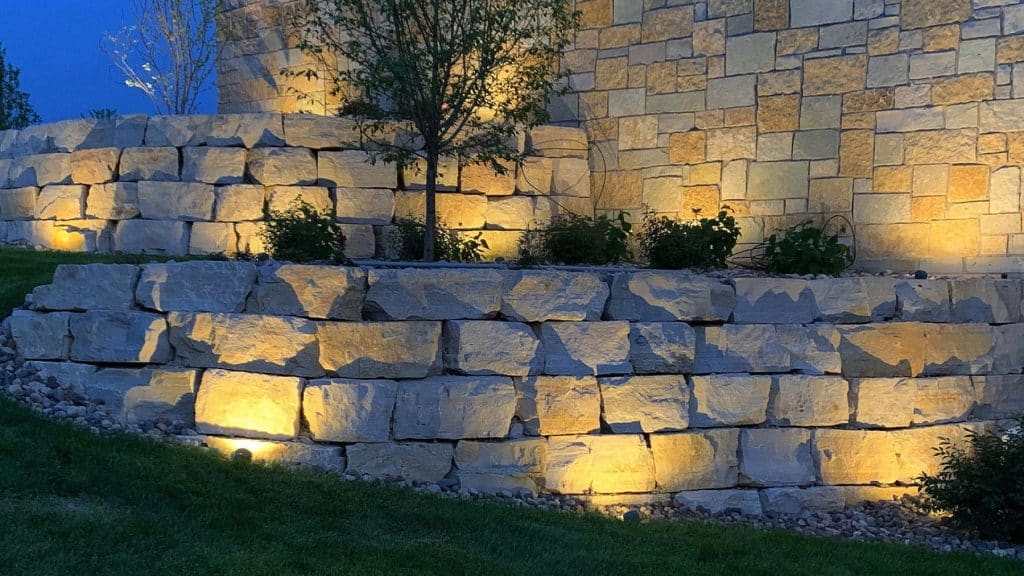
Natural Stone with Discipline
Natural stone can absolutely belong on a lakefront patio, but selection requires restraint.
Not all stone performs equally near water. Soft, porous stones absorb moisture, which leads to discoloration, spalling, and accelerated wear.
When we specify natural stone for waterfront projects, we prioritize dense, low-porosity options that resist water infiltration. This dramatically reduces maintenance over time.
The benefits show up in practical ways:
- Stone that resists moisture absorption reduces freeze-thaw cracking. That means fewer repairs and less surface degradation in colder seasons.
- Dense stone also holds its finish longer. Softer materials erode subtly under wind-driven debris and repeated cleaning. Over time, that erosion dulls the surface and creates uneven wear patterns.
- Properly selected natural stone can maintain depth and texture for years with minimal intervention, provided it is installed with correct drainage and joint spacing.
Natural stone requires more awareness than porcelain, but when chosen wisely, it balances organic character with manageable upkeep.
Architectural Concrete for Clean Simplicity
Concrete often gets underestimated because it appears simple. In modern lakefront patio design, that simplicity is an advantage.
When properly poured, finished, and reinforced, architectural concrete creates seamless surfaces that feel intentional and refined. From a maintenance perspective, it offers several long-term benefits.
- It minimizes joint lines. Fewer joints mean fewer areas for weeds, debris buildup, and water infiltration. Clean lines also simplify seasonal cleaning.
- It provides structural stability. Proper sub-base preparation and expansion joint planning reduce cracking and shifting, even with seasonal temperature changes and moisture exposure.
- It handles traffic exceptionally well. Heavy foot traffic, coolers, outdoor furniture, and movement from dock to home do not compromise the integrity of a properly engineered slab.
Concrete does require periodic inspection and, in some cases, sealing depending on finish selection. However, compared to segmented paver systems with numerous joints, it often reduces ongoing upkeep.
Its strength lies in consistency.
Corrosion-Resistant Structural Components
The most expensive maintenance problems rarely start on the surface. They begin underneath.
Moisture at the lake accelerates corrosion. Standard fasteners and connectors can begin to deteriorate long before visible materials show wear. Once structural components weaken, the surface above them follows.
We specify corrosion-resistant fasteners, marine-grade hardware, and moisture-aware framing systems where appropriate. These components cost more at the outset. They prevent costly structural repairs later.
The maintenance benefit is simple: you avoid hidden failure.
When hardware corrodes, surfaces shift, then cracks form. And when cracks form, water penetrates. That cycle leads to escalating repairs.
By investing in corrosion-resistant systems from the beginning, you dramatically reduce the likelihood of structural movement and premature replacement.
You will never see these components once installed. You will absolutely feel their impact years later if they fail.
We build for what is hidden as much as what is visible because long-term performance defines true waterfront luxury.
If You’re Seeing Early Signs of Wear, Now Is the Time to Evaluate
You might notice small cracks that weren’t there last year. Rust stains bleeding near joints. Slight movement where the patio meets the dock. Areas that hold water longer than they used to. Softness underfoot where everything once felt solid.
None of these automatically mean you need a full replacement. They do mean it’s worth understanding what’s happening beneath the surface.
Most homeowners wait until a visible failure forces action. A shifting step during a gathering. A board that loosens mid-season. Water pooling in places it never did before. That’s the expensive moment.
Late winter and early spring create an ideal window for evaluation. Surfaces are exposed. Traffic is lighter. Adjustments are easier before entertaining season begins. A site evaluation does not assume a rebuild. It confirms stability.
We assess drainage patterns, structural alignment, fastener condition, dock transitions, and shoreline edges. In many cases, the solution is preventative reinforcement or minor correction rather than major reconstruction.
Addressing small issues now protects against larger disruptions later.
Waterfront patios reward proactive ownership. If you’re noticing early signs of corrosion or seasonal wear, this is the time to understand what’s happening before summer puts more demand on the space.
Designing for Heat, Drainage, and Environmental Stress
Waterfront patios endure environmental forces most backyard patios never encounter.
Managing Surface Temperature
Reflected sunlight increases heat retention. We evaluate Solar Reflectance Index (SRI) and choose materials that remain comfortable under direct and reflected sun.
Light-toned surfaces often perform better than darker options in high-exposure zones.
Integrating Invisible Drainage
Drainage rarely appears in inspiration photos, yet it determines longevity.
We slope surfaces intentionally:
- Away from the home
- Away from structural edges
- Toward concealed drainage channels
Hidden drains and controlled runoff paths prevent pooling and protect substructures.
Reinforcing Shoreline Edges
If the patio approaches the shoreline, we evaluate soil stability and water impact patterns.
Retaining structures, when necessary, integrate into the design language. They serve structural needs while doubling as seating edges or clean transitions.
The goal is to embed the patio into the landscape rather than perch it on top.
Lighting That Transforms the Experience
Daylight flatters most patios. Evening exposes design weakness.
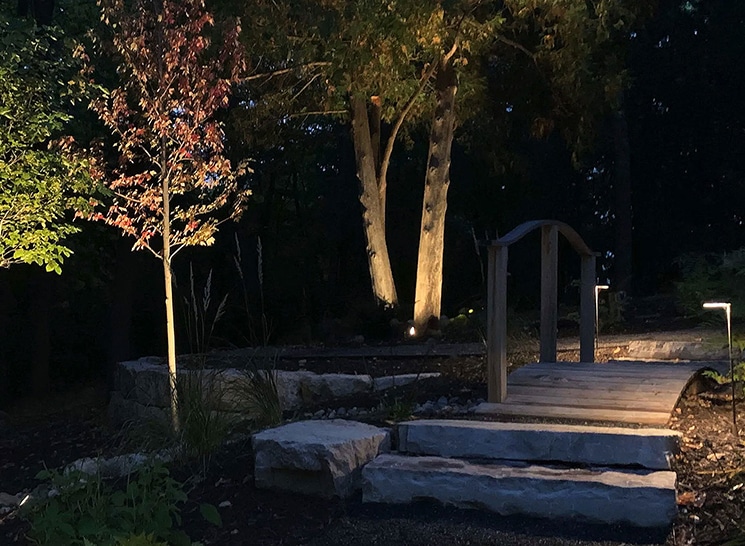
Modern lakefront patio ideas incorporate architectural lighting that enhances form without overwhelming it.
Layering Light Subtly
We use:
- Recessed step lights
- Linear LED strips along edges
- Low-profile fixtures that wash walls gently
Light should guide movement without creating glare.
Reflecting Light Across the Water
Subtle illumination along retaining edges or dock transitions can create reflections that extend the visual space.
The effect should feel natural, not theatrical. When lighting integrates into structure, it enhances architecture rather than competing with it.
Entertaining Zones That Feel Unforced
Modern waterfront patios often include outdoor kitchens and gathering zones. Placement determines success.
Wind and Smoke Planning
Cooking areas should align with prevailing wind direction. Smoke and heat must travel away from primary seating.
Integrated Storage
Cabinetry should conceal tools, cleaning supplies, and accessories. Visible clutter undermines refined design.
Defined Seating Hierarchy
Create primary and secondary seating areas. Allow guests to gather without blocking movement.
Covered vs Open Zones
Partial overhead coverage extends usability during rain or intense sun. Clean-lined pergolas or minimalist roof extensions maintain architectural integrity.
Entertaining should not require rearranging furniture or managing environmental discomfort. When design anticipates these factors, hosting feels effortless.

Integrating Patio, Dock, and Lift as One System
Lakefront patios do not exist independently. They connect physically and visually to docks, lifts, and shoreline structures. Alignment matters.
Coordinating Elevation and Clearance
Patio height must correspond with dock elevation. Poor alignment introduces awkward steps and unstable transitions.
Preserving Sightlines
We align structural elements so that from the patio, the dock and water remain visually cohesive. Disjointed transitions weaken the overall design.
When the patio, dock, and lift function as one waterfront system, the entire property feels deliberate.
Infinity Lift Integration
When homeowners incorporate lift systems like the LakeScape Infinity Lift, clearance and structural support must align with patio and dock placement.
The Infinity Lift’s balanced load distribution and higher weight capacity help maintain dock stability. When integrated during the design phase, lift systems operate seamlessly beneath overhead structures.
Planning these elements together avoids future modification. One waterfront system performs better than separate projects layered over time.
Designing for the Future, Not Just Today
Lake properties evolve. Boats increase in size. Entertaining grows more frequent. Technology advances.
We design patios with margin.
Clear circulation paths can handle higher traffic. Electrical planning anticipates lighting and audio expansion. Structural edges allow for future dock adjustments. A patio built only for today may require modification sooner than expected.
Forward-thinking design protects against rework.
Modern patio ideas account for:
- Drainage slope away from structural edges
- Reinforced retaining solutions where necessary
- Soil stabilization near transitions
- Controlled runoff paths
Forward-thinking design protects against rework.
Setting the Standard for Lake Homeowners
Most lake homes follow predictable patterns. Whether it’s large furniture clusters, decorative lighting, or heavy decorative pieces.
Modern architectural patios stand apart precisely because they resist excess.
Subtle dominance comes in clean lines, intentional materials, and controlled lighting. Spaces that feel curated rather than “trending”.
Being first does not require extravagance. It requires foresight.
When a patio integrates seamlessly with dock, lift, shoreline, and home architecture, it signals thoughtful design. Guests may not articulate why the space feels different. They feel it.
Modern lakefront patio ideas reward proper planning.
Recognizing When It’s Time to Redesign
Patios evolve so here are the signs it may be time to reassess:
- Traffic congestion near dock transitions
- Clutter accumulating around seating
- Surface fading or cracking
- Drainage issues near the shoreline
- Mismatch between patio elevation and dock access
Refreshing furniture rarely solves structural inefficiencies. Upgrading the system restores clarity and elegance.
Frequently Asked Questions About Modern Lakefront Patio Ideas
What patio ideas work best for lakefront homes?
Patio ideas that prioritize structure, drainage, and integration perform best. Clean lines, durable materials, and seamless dock transitions create lasting results.
How do I design a patio near water?
Begin with shoreline evaluation. Align grade, drainage, and structural elements before selecting finishes or furniture.
What materials last longest for waterfront patios?
High-quality pavers, architectural concrete, and dense natural stone perform well when installed properly.
Do I need a retaining wall for a lakefront patio?
You may need one if the property includes steep grade changes or erosion concerns. A site evaluation determines necessity.
How do I integrate my patio with a dock?
Align elevations carefully and plan traffic flow early. Consider lift clearance and structural alignment during the design phase.
What makes a patio feel high end?
Minimalism, material continuity, integrated lighting, and concealed storage elevate perception.
Are modern patio designs better for lakefront homes?
Modern designs emphasize clean lines and structural clarity, which often perform better in waterfront environments.
Can I update my existing patio?
Yes. Reassessing grade alignment, lighting integration, and material upgrades often restores performance and visual cohesion.
Designing the Waterfront Experience
Modern patio ideas for lakefront homes require more than inspiration. They demand integration. When homeowners approach waterfront design as a system rather than a surface, they create environments that feel effortless, refined, and structurally sound.
LakeScape evaluates shoreline conditions, dock alignment, lift integration, and architectural flow before finalizing patio design.
The result is not just a patio. It is a waterfront experience designed to perform.
